Friday, August 13, 2010

Featured Food: Swiss Chard

Swiss chard is a tall leafy green with a thick stalk that comes in white, red, or yellow. It belongs to the same family as beets and spinach. What's so great about this leafy green? It is an excellent source of vitamin K, vitamin A, vitamin C, magnesium, manganese, potassium, iron, vitamin E, and dietary fiber. In addition it is a good source of calcium, copper, vitamin B2, vitamin B1, vitamin B6, phosphorus, folate, zinc, biotin, niacin, and pathogenic acid. As we discussed yesterday, the vitamin K is beneficial for bone health. Its helps prevent extra osteoclasts and breakdown of the bone. Swiss chard has 716% of the daily recommended allowance. The magnesium regulates muscle tone by balancing calcium. The vitamin C and vitamin E act as antioxidants that are essential for anti-inflammation. they help prevent cardiovascular disease by preventing free radicals to oxidize cholesterol. Vitamin A is important for eye and lung health, and Swiss chard provides 110% of the RDA! Potassium is essential for steady blood pressure and heart function. The iron provided helps oxygen distribution and keeps the immune system healthy. High fiber content reduces cholesterol and lowers blood sugar levels. The fiber in combination with the phytonutrients have been shown in studies to be effective in preventing digestive tract cancers. The Fiber combined with magnesium and potassium has been correlated to a reduced risk for stroke in men.
Swiss chard is great for the brain too! People who consume as little as 2.8 servings of vegetables have 40% less decrease in cognition. Put them in a salad or try them in an omelet; they're colorful and fun, in addition to being packed with benefits!

Thursday, August 12, 2010

Vitamin K

Since it's green week, I felt it was appropriate to cover a vitamin found in leafy greens. Vitamin K is important because it allows for:
* blood clotting
* protects bones from fractures
* prevents postmenopausal bone loss
* prevents artery calcification (hardening)
*protects against liver and prostate cancer.
Vitamin K is essential for blood clotting. Clotting is what is needed to close wounds and prevent excessive bleeding on such things as a simple cut. Vitamin K keeps blood clotting ability at the exact right level. Research is currently going on to determines vitamin K's roles in: protection against oxidative damage, proper regulation inflammatory response, and support of brain and nervous system structures. Most of our dietary vitamin K comes in the form of phylloquinoes from plant foods (90% dietary vitamin come in this form and over half from vegetables; especially green leafy vegetables).  Excellent sources of vitamin K include: spinach, Brussels sprouts, swiss chard, green beans, asparagus, broccoli, and kale. Vitamin K- another reason to eat a leafy green salad!

Wednesday, August 11, 2010

Get Outside! Green Exercise


Now and coming up in the fall is the perfect time to start incorporating some green exercise. What is green exercise? Well it's quite simple: exercise outside. Anything goes from walking, gardening, cycling, fishing, boating, horse-riding, hiking, or farming. We've already discussed the benefits of low aerobic activity, plus you can incorporate play and soak up some vitamin D. All of this just by going outside and doing as little as walking. Studies in England have shown that as little as five minutes of green exercise can improve mood and personal well-being. A study of 1,252 people in the UK showed that activity in natural areas decreases risk of mental illness and improves sense of well-being. What's even better is that a blue (water) and green environment seems to be even better help, so go to a lake and walk around, jump on a kayak, or jump in the water and swim. Think about it, don't you usually feel a little better after a little time outside? I find it calming and relaxing. Sure it's hot right now, but try going out earlier in the day or later in the evening. I hike Monday and Thursday mornings starting at seven in the morning, so that I am done before it's scorching outside. The options are limitless, it's easy- just step outside, and it takes as little as five minutes to get benefits. Check out some of the ways me and my family get green exercise. the first is my wife practicing her kettlebells on the beach. Next are my employees on our staff hiking trip in July. Lastly there is my wife Susan and I on a hike behind our home in New Goshen.

Tuesday, August 10, 2010

Green Eating

Most people today seem to be in support of the Green movement, or at least are conscience of it. Most try to recycle and such, but do we think of ways to eat green? Today I'll look at some ways for greener eating habits. Following these guidelines will decrease landfills, pesticide use, overfishing and consumption of fossil fuels, improve welfare of worker, encourage humane treatment of livestock, and reduce toxic chemicals at home. I found this list and decided to incorporate the ones I found most useful:

  1. Boil once, cook twice: reuse boiling water to poach shrimp
  2. Fill your freezer: empty freezers use more energy
  3. Make a bison burger: ironically a rise in consumption need has helped the bison population from 1,00 in the late 1800's to 450,000 today.
  4. Ask your farmer questions: are your products certified organic? Do you use organic practices? Do you use non-synthetic pesticides?
  5. Don't open that door: opening the oven loses 25-50 degrees every time.
  6. Buy a side of beef: purchase grass-fed beef straight from the farmer. You'll support local farmers with an interest in taking care of the environment. But it also requires no fossil fuel for transport and regrowth of the grazed grass removes cabon monoxide from the air.
  7. Cook more ofter: Avoid packaging and preservatives from processed foods.
  8. Roast a whole chicken: less processing and less packaging= less waste. Use the bones to make your own stock.
  9. Become a human food processor: less electricity.
  10. Eat wild Alaskan salmon-takes care salmon stocks in a truly sustainable way. Also wild is purer and contains more omega-3's.
  11. Savor Sardines: give tuna a break, try sardines. They aren't in danger of being overfished and they have lower mercury levels than tuna.
  12. Get a scoop: bulk in bin sections (nuts) free of excessive packaging and minimally processed (less manipulated by fossil fuels).
  13. Plant heirloom vegetable garden: non-hybrid traditional vegetables that have not been genetically modified.
  14. Be your own barista: save on budget and landfill waste. Buy fair-trade organic, use French press coffee maker, and a portable mug.
  15. Treasure your trash: recycle take-out containers.
  16. Make stock: whatever vegetables you have leftover.
  17. Join a CSA: Community Supported Agriculture. Get boxes of fresh fruits, veggies, meat, and eggs from a local farms delivered to your pickup location.
  18. Text 30644 and enter FISH, then name the fish you want to buy. Receive a text telling you if the variety is good for you and the world.
  19. Veg out: requires less energy and water to grow and produce no greenhouse gases.
  20. Turn off the light: when you leave the kitchen!
  21. Clean green: cut landfill production by 2/3 by putting vegetable scraps in a composter.
  22. Eat grass-fed beef: cows are meant to graze on grass. This solves waste-management problem and improve the fertility of the soil.
  23. Eat sustainable shrimp: farm raised shrimp are pumped with artificial feed and antibiotics and raised in ponds that pollute the water.
  24. Eat sustainable sushi: seafoodwatch.org
  25. Become a locavore: eat only food grown or produced near home. This supports the community and lowers your carbon footprint.
  26. Bike to the market.
  27. Support local green restaurant: find neighboorhood restaurants, butchers, and markets that serve fresh, sustainable organic food (eatwellguide.org).
  28. Go bento: stainless steel lunch box.
  29. Use your diswasher: when full and organized it is more water efficient.
  30. Bag it: any old bag will do.
  31. Take the leftovers
  32. Pack your own lunch: reduce consumption of take-out and processed foods.

Monday, August 9, 2010

Green Week: Thermogenesis


The more and more I read the more convinced I am that I am on the right path with my eating. Stop eating grains, starches and sugars and load up on vegetables, lean proteins, and low-glycemic fruits. I've incorporated thermogenic foods into my program for awhile, so I figured today as part of Green Week that we'd cover thermogenesis. What is thermogenesis? One of the biggest energy expenditures in humans is thermic, or heat energy. So thermogenesis is the creation of heat. We can do this through exercise (warm muscles work more effectively than cold muscles). We also thermo-regulate. The body does this by shivering (done by the muscles to create heat) or non-shivering (diet induced). When we're cold or eat lots of food the hypothalamus gland triggers the sympathetic nervous system (which controls things like heartbeat and breathing) to release neuroepinephrine from the synapse. This turns up thermogenesis (or think of it as turning up a thermostat) so less energy is used for work and storage and less goes to fat. This increase in thermostat causes less appetite (same as with exercise, it increases metabolism and you feel more energized). This is all important because you want to eat foods with higher thermogenic foods. Heat producing foods help burn stored fat and increases energy levels. They take calories to consume! Take for example broccoli (which already has few total calories) but in terms of thermogenesis has even fewer actual calories. This means you should try to consume carbohydrate foods with a higher thermogenic per unit of carbohydrate, which means you can consume more food! In addition eating these food correlate to a better metabolic rate and satiety. So basically you're eating MORE, food volume is important for appetite regulation. In addition thermogenic foods tend to be lower in carbohydrate total because you subtract fiber from carbohydrate total to determine "active carbs". Carbohydrate dense foods are nutrient sparse and carbohydrate sparse foods (thermogenic) tend to be nutrient dense. What foods are good at providing thermogenesis? The best thermogenic fruits are: apples, apricot, blueberries, cherries, peaches, strawberries, raspberries, pears, and grapes. Lean proteins are also a great source, which use 30% of the calories they contain just for digestion and processing. Usually when I talk about thermogenesis I look at vegetables. The following vegetables don't even count toward a daily carb limit (eat unlimited quantities): asparagus, broccoli, cauliflower, Brussels sprouts, celery, lettuce, cabbage, mushroom, radish, radicchio, and spinach. Bottom-line consuming lean proteins and large amounts of thermogenic vegetables is the way to go. You won't starve- you can eat UNLIMITED amounts of the vegetables. You eat more while consuming less carbs and calories, but get more nutrients!

Friday, August 6, 2010

Featured Food: Sea Vegetables

Sticking with the water theme, let's look to the water: sea vegetables. Sea vegetables are neither plant nor animal, they are classified as algae. Pound for pound they are the most nutrient dense food there is. They provide all 56 minerals that the body needs for optimal function. They're a great source for : vitamin K, iodine, B-vitamin folate, magnesium, iron, calcium, B-vitamins riboflavin and pantothenic acid. It is one of the only non-meat sources of B12 (July 1). One factor, lignans are important for cancer. They inhibit blood cell growth (process by which tumors gain nourishment and sends cancer cells out into the bloodstream to create more tumors). The iodine found in sea vegetables (especially in kelp) is a key component for thyroid hormones, essential to human life. They also are great for the heart! The magnesium reduces blood pressure and helps prevent heart attacks. Also, the folic acid (also important in preventing birth defects like spina bifida) breaks down homocysteine that damages blood vessel walls and increases risk for cardiovascular disease and stroke.  Sea vegetables provide funcans, that reduce inflammatory responses. They are affordable and delicious as well. You can find a variety: kelp, wakame, kombu, arame, alaria, and of course nori (which is what most people have heard of- sushi)  are just some that you can find. They come in a variety of ways (roasted and dried probably the most common ways).  They are great to add to soups or salads. Replace your salt shaker with kelp flakes. Better yet improvise and make some sushi! Load up on omega-3 by grabbing some wild salmon fill with veggies or try cauliflower rice (June 15 recipe), roll and enjoy sea vegetables and all their mineral goodness.

Thursday, August 5, 2010

Added Bonus; Coconut Water

I was inspired by my research on electrolytes, to write about coconut water. I've been doing a lot of research on coconuts (in fact check July 5), but I haven't covered coconut water itself. Coconut water has been getting a lot of publicity lately, with celebrities like Madonna raving about it. So what's so great? One of the major benefits of coconut water is what we've already discussed; it is naturally high in electrolytes. What else can we gain from drinking coconut water and what is it? Most get confused about coconut water and coconut milk. Coconut water is the clear liquid in the middle of a coconut before they have matured, which is why it's better to harvest them while they're still green (the flavor then is light and sweet). Drinking when freshly cracked is best too, because once they're exposed to air then it's organoleptic and nutritional characteristics start to fermit. In addition to supplying electrolytes, it is a good source of potassium, magnesium, vitamins, and proteins. Benefits include: hydration, cools body temperature, maintains immune system, ease urinary tract diseases and dysentery (because of it's saline and albumen content), and used as an antiseptic. Something I found interesting is that it can be used in blood transfusions (as a matter of fact it was used for blood transfusions during the Pacific War 1941-1945). Great news for those wanting to lose weight is that is helps raise metabolism and promote weight loss. Also if you indulge in a drink occasionally, it's been shown to alleviate nausea, therefore making it a natural cure for a hangover. Altogether I think it's an interesting drink. It's loaded with benefits and electrolytes, and is low in calories!

Electrolytes

Today I intended to write solely about electrolytes, but I'm going to branch out and write a separate article on coconut water. Since Thursday's are dedicated to chemicals and such, I decided to cover electrolytes. I've been getting Smart Water (since it's water week), which is labeled as being enhanced with electrolytes. What are electrolytes? Most of us probably have heard of them, or at least know a common product who markets electrolytes. Ever heard of Gatorade? Before I trash Gatorade let's look at what electrolytes are. Basically they are salts (ions if you want to get detailed).  Ions are electrically charged particles which move toward a negative or positive electrode. The major electrolytes to humans are: sodium, potassium, chloride, calcium, magnesium, bicarbonate, phosphate, and sulfate. These ions are used by cells (especially in muscle, nerves, and the heart) to maintain voltages across the cell membrane and to carry electrical impulses (such as muscle contraction) to other cells. The kidneys work to maintain electrolyte levels.  These levels have to be restored to prevent dehydration and seizures. When you exercise heavily and sweat, electrolytes are released and need to be restored. Bring into play Gatorade, which contains electrolytes. Bad part is that Gatorade is also full of sugar (one of the three poisons), so what most think is helping is really making things worse. Gatorade contains high fructose sugar and drinking one a day can add 13 pounds in a year! What other options do you have? I found Smart Water, which is a vapor-distilled, electrolyte enhanced water. How perfect, a product that's not artificially sweetened (it's water, duh)! I'm not suggesting that everyone go out and stock up on Smart Water, but if you're working out strenuously and sweating it's not a bad idea to drink one and restore those electrolyte levels. I think this picture is a good reflection of life style, would you rather look like the Gatorade chugging cop or the water drinking Jennifer Aniston? (Next up is coconut water, which naturally contains electrolytes).

Wednesday, August 4, 2010

The Kettlebell, The Sun, And My Day At The Pool!


Ok so today's blog is simple and fun. It's scorching outside right? And you can't exercise out there because you'll dehydrate, right? Well this is a fun little video showing you how to be outside, cool off, and still exercise. Have a pool? Take your kettlebells to the pool and do some swinging for variety and to spice things up. It'll be refreshing. This video is fun (but ignore the stretching in the video), so take your workout outside and head to the pool!

Tuesday, August 3, 2010

Cold Water Therapy

I find this topic quite interesting after I read about it on Primal Blueprint's blog. It stated that cold water therapy could introduce the body to natural stresses, which could have health benefits. Most of us are a little turned off by the idea of a cold shower, right? We look forward to those long hot showers, and hate it when we have to shower last, when all the hot water is gone. Is it bad to endure a cold shower once in awhile though? What are the benefits to a nice cold shower? First we'll look at it from an exercise point of view and the positive effects of taking a cold shower after a tough workout. Firstly, it constricts blood vessels and flushes out waste (like lactic acid, which is what's causing you to be sore after a workout). It can also slow down the physiological processes and reduce the swelling and tissue breakdown. The rewarming after a cold shower increases circulation, which improves healing after a workout. Other benefits: cleans the circulatory system, flushes organs out and provides a new blood supply, reduces blood pressure of internal organs, contracts muscles to eliminate toxins, strengthens the sympathetic and parasympathetic nervous systems, strengthens mucous membranes, and reduces pain by releases endorphins. Not only does it have all of these physical benefits, but emotionally as well! Cold water can be emotionally uplifting and prepare you for new experiences. One source I read said that cold water wipes away negative energy, which I found interesting (if you believe in that kind of thing). This correlated to ocean swimming which is said to do the same, which is why beach cultures tend to be considered more laid back (just an interesting side note that I enjoyed). Studies on cold water therapy has shown promise for chronic fatigue syndrome, chronic heart failure, and some cancers. What should you do to get benefits? There was no conclusive evidence of which works best, but it appears that habituation seems to be effective. Basically incorporate some cold showers into your routine. Start with shorter ones or work with feet first and then full body. Spice things up every once in awhile by adding full immersion in cold water, like jumping in a cold spring or something. Just have fun, start out slowly or just jump in!

Monday, August 2, 2010

Water Week

I like themes, so this weeks theme is going to water; benefits of water, products of water, anything is possible. Today, however, we are fist going to examine the benefits of drinking water. As most should know by now I believe in drinking water in it's purest form (no longer do I drink anything else, no coffee, pop, or anything sweetened artificially). Most people know that they should drink it (drink 8 glasses of water a day, I'm not going to give a number but am just going to start with Drink It!), but prefer to suck down various sources of unhealthy or nutrition less beverages. "I don't like the taste of water," seriously there really isn't a taste to water, that's just another lame excuse. Why drink water? First let's look at water and then we'll get into the benefits. Over half of your body is comprised of water (55-78% depending on body size). Let's break this down further into the organ percentages comprised of water: brain 90%, muscle 75%, bone 22%, and blood 83%. Water works in the body to transport nutrients and oxygen to cells, helps metabolism,, protects vital organs, helps absorb nutrients,  moisturizes air in the lungs, detoxifies, protects and moisturizes joints, and regulates body temperature. Lacking water (dehydration) can cause tiredness, migraines, constipation, muscle cramps, kidney problems, and dry skin. Let's look at the benefits of drinking water now:

  • Weight Lose: flushes by-products of fat breakdown down. In addition it provides satiety and reduces hunger. Plus it's a guarantee zero calorie drink

  • Natural headache remedy: often times headaches can be caused by dehydration, so keeping hydrated can prevent them.

  • Healthier skin (younger looking): water increases skin elasticity, replenishes skin tissue, and moisturizes skin.

  • Better productivity at work: because the brain is mostly water, then drinking water can help you think and concentrate better, in addition to being more alert.

  • Better exercise: helps fuel muscles.

  • Helps digestion and constipation: raises metabolism.

  • Less cramps and sprains: helps to keep joints and muscles lubricated.

  • Less likely to get sick.

  • Relieves fatigue: flushes out toxins and waste products, other wise organs (like the heart) have to work harder and you and your organs become exhausted.

  • Reduce risk of cancer: studies show reduced risk of bladder and colon.
Pretty simple blog today and it's an easy step you can take to improving your health, so drink up!

Book Review

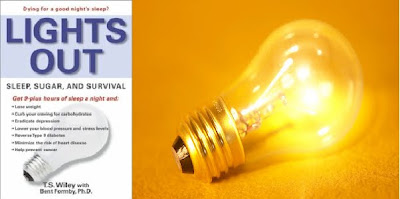
Ok so this was supposed to be yesterday's post, but I finished the book yesterday. The book is called Lights Out, I found it to be quite fascinating. It explains (with science and studies) that availability of light (artificial light) 24/7 has transformed human health. We have manipulated our environment so that we are constantly in a summer day (heat during the winter prevents true-winter). Humans originally loaded up on carbohydrates and added a few pounds during the summer because in the winter they went into a hibernative/dormant state when carbohydrates were scarce. Now it is continuously summer and we crave carbs all year long. We aren't overeating veggies and fruits though. We've been told that high carb low fat is the way to go which. Which is the opposite of what need. We constantly spike our insulin levels until we become resistant to it and get diseases like diabetes. The author links all illness (diabetes, heart disease, and cancer to our ready supply of light). Basically overeating carbs and insulin resistance are causing all of our problems. We crave carbs because it's summer, but also because we don't get enough sleep to restore prolactin, which controls appetite. This is the general idea of the idea, although it goes into much further detail, but I'm going to end with some of the notes I took while reading it, but like I said I found it very fascinating (and it supports my beliefs of eliminating grains and sugars to control insulin levels).
• Steadily decreasing our consumption of fat and cholesterol and yet increasing our incidence of obesity, disease and death.
• Long hours of artificial light= summer in your head. Winter signifies famine to your internal controls. Famine on horizon signifies instinctive carbohydrate craving to store fat for hibernation and scarcity.
• Incidence Type II diabetes dropped sharply during WWI and WWII when sugar was rationed.
• We are as addicted to a low-fat, high sugar diet as alcoholics are to alcohol, because high insulin levels creates the same brain state as alcohol does.
• Preventative medicine is thought of as alternative medicine in this country.
• The truth about research is that research isn’t about discovering the truth, it’s about making money (research in US predominately paid for by drug companies and government).
• Definition of life is the ability to learn and change in response to experience.
• Hours light exposure control growth symbiotic bacteria (keys life & death & dress size)
• Circadian rhythmicity (night-day cycles) along with carbs control insulin production.
• Get up with the sun, sleep with the moon, eat only your share and be fruitful and multiply
• Life, without all we do to kill time, is only sleeping, eating, and sex
• Unnatural world endless summer and sugar leptin receptors burned out, and there is no longer a curb on appetite for sugar (leptin resistance- cause fat to get fatter- because fat people are always hungry people); prolactin pushed into daytime by short nights suppressed leptin and left appetite for carbohydrate turned on (summer)
• You should wake up hungry with low insulin and cortisol rising to deal with stress during the day.
• Less sleep at night (therefore less melatonin and less leptin) makes you eat more, day and night.
• Without incoming carbohydrates you will drop 10 or so pounds of retained fluid, dropping your blood pressure and burning your fat base, a process that throws off ketones and reduces your serotonin too, so you’re not as depressed or paranoid.
• Running, jumping=being chased=stress response=cortisol release=blood sugar mobilization=blood sugar up=insulin up= insulin resistance=fat storage and hypertension
• Endothelial cells (line heart) control clotting, over-growth, fat metabolism and blood pressure. You can kill them 4 ways: chronic high cortisol; high levels endotoxin LPS (no sleep); high homocysteine (too much light); shear stress (seasonal high blood pressure- along with “water weight” and serotonin and insulin resistance-that never ends)
• When you eat to much carbohydrate for too many months of the year, never empty your storage sugar, or burn fat to imitate famine, insulin produced by your pancreas day and night in response to all of the sugar, causes rebound addictions and substance abuse through the production of serotonin and dopamine, bipolar behavior (ultimately) and maybe even schizophrenia
• Obesity is simply a different symptom of the same syndrome that causes everything else that plagues modern man
• There are no bread trees or pasta bushes. Breads and pasta do not occur in nature.
• Nine and a half hours of solid sleep at least 7 months out of the year is the minimum required to beat cancer, diabetes, heart disease and depression
• Many “food products” that are labeled “sugar free” contain other sweeteners that will raise your blood sugar and spike your insulin just as real sugar would
• Green vegetables: fibrous content slows down digestive process, which lowers the glycemic index of your entire meal.
• Eat real fats; fats become useless when they are accompanied by sugar or when their chemical structure is changed.

Saturday, July 31, 2010

Cheeseburger Soup

2 lbs. lean ground beef (venison or any kind of lean ground optional)
1 sm. Onion - diced
1 green pepper - diced
1 red pepper - diced

Cook until meat is done Add:
1 32 oz. container beef broth
1 can diced tomatoes
1 med. head cabbage or 1 pkg. Shredded cabbage
pepper and salt to taste ( hot peppers optional)

Bring to low boil and cook for 5 min. Turn heat to low and add 2 1/2 cups Nacho Cheese. Stir until cheese melts.( optional - Bacon pieces to bring the fat count up / or any of the above ingredients )

Friday, July 30, 2010

A Rainbow of Fruits and Vegetables

Alright so on Monday we posted about organic fruits and vegetables and I promised to cover the rainbow of colors and phytonutrients, so let's get down to it.

Red- Colored by lycopene or anthocyanins. Lycopene (found in foods like tomatoes and pink grapefruit) may reduce the risk of several types of cancer (like prostate). Anthocyanins (strawberries and raspberries) are powerful antioxidants (for healthy hearts).  Examples: apples, beets, cherries, cranberries, red peppers and radishes.
Orange/ Yellow: Colored by carotenoids. Beta-carotenes (found in carrots and pumkin) are converted to vitamin A to maintain healthy mucous membranes and healthy eyes. Helps to reduce the risk of cancer, heart disease, and improves immune system function. Reduce risk of developing age-related macular degeneration by 43% and lowers the risk of heart attacks by 36%. Examples: apricots, lemons, nectarines, peaches, pears, yellow peppers, and tangerines.
Green: Colored by chlorphyll. Some that contain lutein (spinach, green peppers, cucumbers, and celery) work with zeaxanthin to reduce the risks of cataracts and macular degeneration. Indoles (in cruciform vegetables like brocoli and cabbage) may protect against some types of cancer. Examples: artichokes, avocados, Brussels sprouts, spinach, asparagus, broccoli, cabbage, zucchini, and cucumbers.
Blue/ Purple: Colored by anthocyanins. A powerful antioxidant that protects cells from damage. Also, may reduce the risk of cancer, stroke, and heart disease. Example: blackberries, eggplant, grapes, blueberries, and plums.
White: Colored by anthoxanthins. Has health promoting chemicals (allicin) that lower cholesterol and blood pressure, while reducing the risk of stomach cancer and heart disease. Examples: cauliflower, jicama, mushrooms, garlic, ginger, onions, parsnips, and turnips.

Thursday, July 29, 2010

Lauric Acid: What is it and Why Should I care?

I've been doing a lot of research on coconut and we've already done an article on coconut products (July 5), but I thought we'd look at one of it's by-products today: lauric acid. It is a medium chain fatty acid. What I found fascinating is that besides coconut, it's only found in high concentrations in breast milk. That is cool, at least to me! Why is this so important? It protects against bacteria and viruses, which is why it's so important that it's found in breast milk  because it helps babies fight off infections. The lauric acid forms monolaurin. Monolaurin is a antiviral, antibacterial, and antiprotozaol monoglyceride that the body uses to destroy lipid coated virsuses (which includes influenza and HIV). What else is great is that it's virtually non-toxic, which gives it an edge over pharmaceutical drugs. Most who consume higher levels experience less sickness. Other benefits include: increased metabolism and improved skin and hair condition. Coconut oil has the highest natural levels of lauric acid. Nearly half of the fatty acids in coconut oil are lauric acid. It has seven grams per tablespoon! Dr. Mary Enig suggests consuming 10-20 grams of lauric acid per day (or 3 tablespoons). It's best to get organic, cold-pressed, extra virgin coconut oil to get the most benefits. Personally I love to use the coconut oil, it has a great smell and flavor. In addition it's great to cook with because it has a higher smoke point. I would say try it, if it's found naturally in breast milk, it has to be beneficial right?

Wednesday, July 28, 2010

Lift Heavy, Build Muscle!

No exercise program can be complete without some kind of resistance lifting program. People get so focused on looking "skinny" or trying not to get "bulky," that they miss the boat with lifting heavy. Lifting weights actually helps weight loss and creates a slimmer figure. Lifting can help increase muscle mass. Muscle burns 30-50calories a day compared to fat, which burns 5-10 calories. Basically if you can create more muscle then you can burn more calories, making weight loss easier and more efficient. Since the muscle takes up less space it actually makes you leaner and slimmer. This is great for physical appearance and body fat percentage but there are other benefits to lifting as well. Benefits include: greater muscular strength, increased endurance, enhanced bone density, improved muscle tone, improved cardiovascular fitness, helps maintain flexibility, and helps prevent osteoporosis. The increased muscle strength can improve posture, reduce risk of injury, and better support joints. An added bonus is the improved mood it brings, with increased levels of dopamine, serotonin, and norepinephrine. It's important to train with heavy weights though. You have to push muscles so they adapt by increasing in size and power, so that the next time you do the same workout it is less stressful than the time before. Important to note that you need to continue to lift heavy because strength will decline if you do not continue a strength stimulus (which is why lifting heavy is essential because it stimulates more muscle fibers). You don't want to do it everyday though because you'll need more time to recover (muscle is built and restored after workouts, not during, which is why rest (including sleep) is important). I liked one quote I found that said "you can't train heavy all the time. . but you can train heavy every time." Lifting light weights doesn't trigger new muscle growth, so if you're going to the gym and not feeling it and think you're going to just take it easy; go home. Lifting light isn't going to accomplish anything and clearly your body needs more time to recover (you're doing more harm than good). Skipping a workout or delaying it a day or two is not the end of the world, it's better (I know most of us feel we need to workout all the time to produce results, but really that can be counterproductive, as we've looked at before with chronic cardio). Determine your one rep max on a lift and aim to lift between 70 and 80% of that when you lift. Make a goal to lift two or three times a week (if you only do one and need more time to recover that's fine too, you've stimulated a lot of muscle obviously). Women aren't going to get bulky either from lifting heavy weights (we'll discuss women's weight lifting in detail at a later date). So go out there and get your Hercules on, feel strong, gain muscle and lose some fat!

Tuesday, July 27, 2010

Taking Care of Others, Wearing on Our Health?

One of my clients gave me an article about the care giving boomerang, and since Tuesday's are spiritual/body blogs I thought it would be appropriate to discuss what I learned in this article. Because people are living longer, people are now going through a second care giving stage (first with their children and then with their parents). Fifties should be a high point in one's life. The kids are grown, so you don't have to balance that with a job. Life should be about pursuing lost dreams and living, but unfortunately this is a time when many have to step into the role of caregiver. Almost 50 million Americans care for an adult who was once independent. The average caregiver is a 48-year old woman with at least one kid still at home and has a job. Care giving can be exhausting, averaging for five years. Most feel that it is an obligation, it's not something that anyone signs up to do. Worst of all is the stress (which leads to other health problems) and as a wellness facility we are concerned with overall health. Caregivers can feel exhausted but can't sleep (which we know the risk associated with a lack of sleep) which leads to chronic stress and elevated cortisol levels. Long term caregivers put themselves at high risk for all kinds of health issues. They have higher risks for: sleep deprivation, immune-system deficiency, depression, chronic anxiety, loss of concentration, and premature death. Not only do they suffer physically, but psychologically as well (feeling under appreciated for their dedication causing some of the worst damage). Eventually it gets to the point where they become to stressed and can't care give anymore and their parent (or whomever they taking care of) end up in a nursing home and then they feel more guilt for not being able to take care of them. What should people do then if they find themselves in a care giving position but they don't want to suffer all the health risks. If you can plan ahead and discuss with family and siblings ahead of time so that you are not alone. Another options are to join a support group.  Try and take at least an hour a day to do something you enjoy, every few weeks or months take longer. Taking care of people you love is important, but so is your health, so plan and take time to yourself to remain in wellness.

Monday, July 26, 2010

Organic Fruits and Veggies

Today's topic is pretty broad and general, but it is important to discuss the carbohydrates that I do eat. I don't recommend not eating any carbs, I say no grains, starches, or sugars. Carbohydrates are the other macronutrients (we've already discussed fats and proteins). Fruits and vegetables provide essential vitamins, minerals, and fiber (all of which are important to protect against chronic diseases like stroke, heart disease, and cancers). They're pretty as well, just look at the picture (this is Pikes Market, by the way, which I would highly recommend going to if you are ever in the Seattle area). All the color and variation is important though. Eating a variety of fruit and vegetable colors provides a range of nutrients (fiber, folate, potassium, and vitamins A and C). Friday's Featured Food page we'll look at a fruit or vegetable for each color and give benefits. Now that we know some of the benefits of fruits and vegetables, let's look at why we should buy organically grown products. Nowadays produce are hindered with hormones and sprayed with pesticides, and we don't know the effects of what these will do to our bodies. One thing about organic is that you get the benefits now without having to wait for the results of these additives and the lasting detrimental effects they may have. There are additional reasons to eat organically though.
*They are hormone free. There is one theory that growth hormone in foods could add to current issue of kids growing up faster and hitting puberty at younger ages.
*Pesticide and Herbicide free. These are poisons used to prevent weeds and bugs, however, they can still contain trace amounts in regular fruits and veggies.
*Higher nutrient levels. Organic fruits may appear smaller, but regular fruits and vegetables bigger size is due to water.
*Prenatal benefits.
*No artificial coloring, what you see is what you get when you bite into it.
*Tastes better. Because they are allowed to grow and mature at their own pace they have a "home grown" taste.
* Promotes a healthier water table. Traditional farming methods allow for poisons (pesticide/herbicides) to make their way into our drinking water.
*Higher levels of antioxidants- Organic fruits are usually fresher and from a local source so they contain higher levels of antioxidants (important to protect against chronic diseases like stroke, heart disease and cancer)
* Supports local economy since most stores have to purchase from local farmers.
One other side note is the benefits of plant food in preserving muscle mass. A study at Tufts concluded that potassium-rich plant foods can help older individuals to maintain lean mass. I wouldn't suggest going hog wild with all fruits and vegetables though. Try to eat more vegetables than fruit because there carb numbers are lower than fruits. Also seek fruits that are lower glycemic (so that you don't spike insulin levels). Great fruits are cherries, blueberries (check out one of Featured Food blogs), blackberries, strawberries, apples, and grapefruits. Fruits to avoid are tropical fruits like watermelon and pineapple. Vegetables eat in unlimited quantities; vegetables that are thermogenic are best. Thermogenic vegetables include: spinach (another Featured Food), mushrooms, raddishes, cabbage, broccoli, cauliflower, Brussels sprouts, asparagus, zucchini, and celery. Fruits and vegetables have numerous health benefits and come in a variety of color. What would I do? Go and make a big colorful salad (spinach, leafy greens, maybe strawberries and blueberries topped with olive oil; skies the limits and the options are limitless) and eat up!

Saturday, July 24, 2010

Blueberry Creams

Ingredients:
2 small cans of heavy whipping cream
mascarpone cheese
honey (raw or blueberry)
fresh fruit (we used blueberries cause they're in season)

In a bowl place the whipping cream, either whisk slowly or use a mixer on slow until it thickens. Add 1 part mascarpone to 2 parts whipping cream. Drizzle in honey (raw is best, but I used blueberry to go along with the fresh blueberries), but you want just enough to sweeten it. Fold all of the in then dish it out and serve with seasonal fresh fruit.

Bacon Asparagus

Ingredients:
Asparagus
Hickory smoked bacon
2 eggs

Preheat to 350 degrees. Snap off the hard ends of the asparagus, then wrap a piece of bacon around one asparagus. Place in oven until the bacon is browned.  Bring water to a boil in a small pan. Place in two eggs (still shelled) and cook for five minutes. Run cool water over the eggs, cut the top off of eggs, and place in a shot glass. Remove the asparagus and place with the eggs. Dip the asparagus into the the eggs and enjoy.